Vechain is a VeWorld wallet route to VET balances and VTHO fees
Public blockchain network where VeWorld gives users access to VET balances, while VTHO is used separately to pay transaction fees.
Vechain is a practical wallet experience for holding VET and paying activity costs with VTHO through VeWorld, the ecosystem wallet used to access balances, apps, collectibles, and transactions on VeChainThor. VET is the main value token in the account, while VTHO handles network fees as a separate resource. That two-token design matters because a user can view long-term holdings and transaction fuel as different balances inside the same wallet.
This page takes the wallet angle rather than repeating the broad chain story. The useful question is simple: what does a person actually see and manage after installing VeWorld, receiving VET, and preparing to send a transaction? The answer sits in three places: custody of the private key, the VET balance that represents the account's main asset, and the VTHO balance that covers ordinary chain activity.
Opening VeWorld before you buy or receive VET
VeWorld is the main wallet interface for Vechain users who want direct access to the network. It is available as a browser extension and mobile wallet, so the same account model works for desktop app sessions and on-phone balance checks. During setup, the wallet creates or imports an account and asks the user to protect the recovery phrase. That phrase controls the account, the VET inside it, and the VTHO associated with the same address.
Once the account exists, the wallet address becomes the receiving point. A purchase from a supported exchange, a transfer from another wallet, or an app payout arrives at that address on VeChainThor. The wallet view separates assets so VET is not confused with the fee token. That matters when the user has enough value in the account but still needs VTHO to move assets or interact with an application.
VET stays visible while VTHO pays the network cost
The most distinctive wallet detail is the split between VET and VTHO. VET is the primary token people buy, hold, transfer, and use across the ecosystem. VTHO is consumed to pay transaction costs. In VeWorld, those balances appear as separate assets because they serve separate purposes. Sending VET, calling a smart contract, approving an asset, or interacting with an app draws on VTHO rather than silently taking the same token being transferred.
Vechain uses this model to make fees easier to reason about at the account level. A person can hold VET and still notice whether the account has enough VTHO for the next action. The fee token behaves like transaction fuel: it is not the asset the user is trying to send, but it is the resource the network spends to record the action.
How fee delegation changes the first transaction
Fee delegation is one reason the wallet experience feels different from many single-token chains. In a delegated transaction flow, an application or sponsor pays the VTHO fee for the user. The user still signs the transaction from the wallet, but the fee burden moves away from the account that initiated the action. This structure supports smoother onboarding because a new address can participate in a supported app before building up a separate gas balance.
That does not make VTHO irrelevant. Direct wallet transfers and many transactions still require the account to have fee capacity. The practical habit is to check both balances before moving funds. Vechain wallet users who understand the distinction avoid the common confusion of seeing VET in an account while a transaction waits for enough VTHO to settle.
Moving from an exchange account into self-custody
Many people first encounter VET on a centralized exchange, then move it into VeWorld when they want direct control. The transfer path is ordinary: copy the wallet address, choose the correct network on the exchange, confirm the withdrawal, and wait for the transaction to appear. The important detail is custody. Inside VeWorld, the recovery phrase controls the address. Inside an exchange account, the platform controls the wallet infrastructure and credits the user internally.
The tradeoff is operational rather than philosophical. Exchange accounts simplify buying, selling, tax exports, password resets, and fiat rails. A self-custody wallet gives direct access to apps, tokens, NFTs, and signing. Before withdrawing, users should confirm withdrawal support for VET on the correct network and keep a small first transfer when learning the process. Sending to the wrong chain or address creates a real loss scenario.
Where Ledger support and mobile access fit
Hardware wallet support gives long-term holders another layer of control. A Ledger device keeps private-key signing on dedicated hardware while VeWorld provides the interface for viewing balances and preparing transactions. The wallet screen still shows VET and VTHO, but the final approval happens on the hardware device. That setup is useful for accounts that rarely transact and should not expose signing keys to a daily-use computer.
Mobile access serves a different rhythm. It is better for checking balances, receiving funds, scanning app connections, and handling smaller activity while away from a desktop browser. Vechain users with larger holdings often separate roles: a hardware-backed account for storage and a mobile or extension account for routine app interactions. That separation keeps the daily wallet useful without putting every holding behind every approval prompt.
Reading balances, collectibles, and apps from one wallet
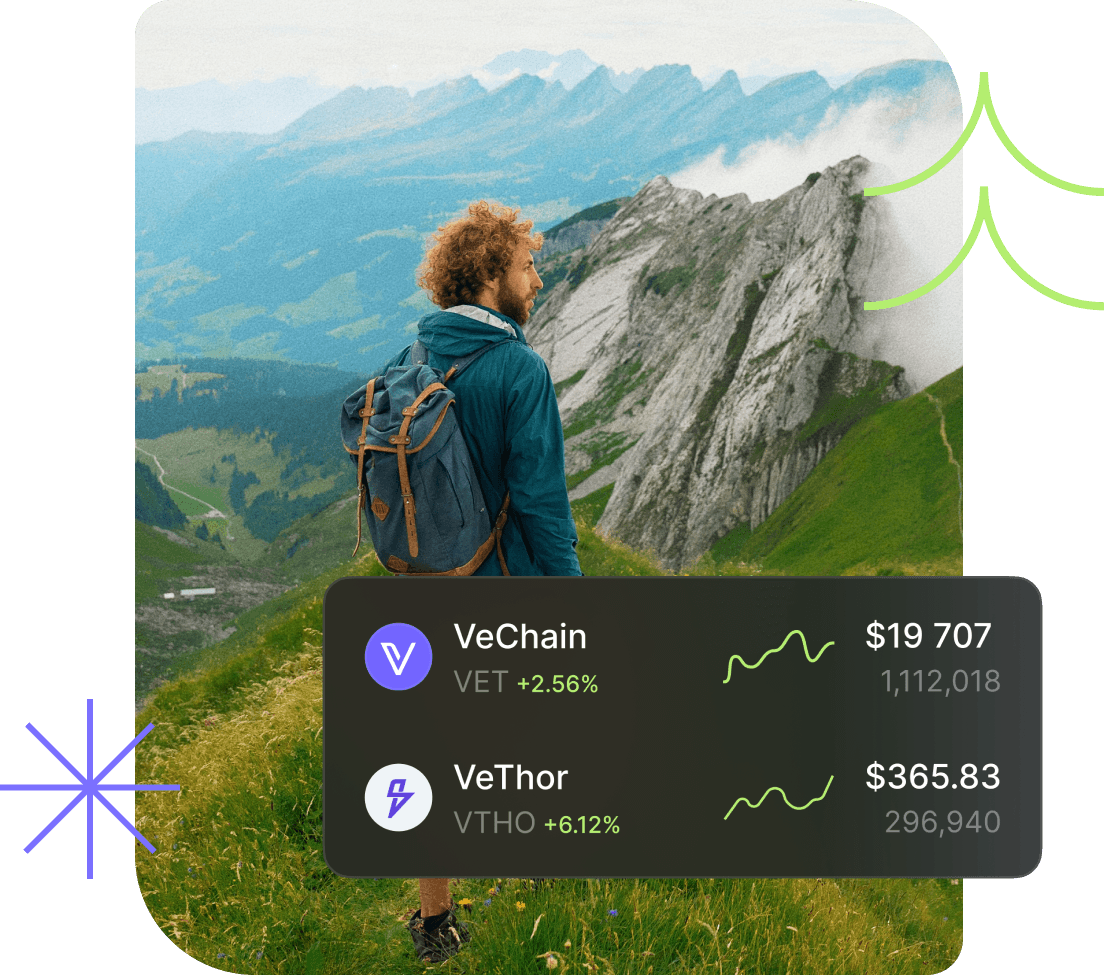
VeWorld is more than a token list. The wallet connects to applications built around VeChainThor, including sustainability actions, digital product records, NFT experiences, and enterprise-facing flows that expose user-side blockchain interactions. The official ecosystem emphasizes real-world applications, and the wallet is the consumer-facing place where those transactions become visible to an individual account.
- VET balance for the main token held at the address
- VTHO balance for network fees and transaction fuel
- Transaction history for sends, receives, approvals, and app calls
- NFT and collectible views where supported assets are displayed
- App connection prompts that ask the wallet to sign a specific action
This combined view matters because blockchain activity is easy to misread when every app hides the account state. The wallet gives the user a common place to inspect what changed after a transfer, reward, marketplace action, or app interaction. It also makes VTHO consumption visible instead of treating fees as an invisible background cost.
When an exchange wallet is simpler than VeWorld
An exchange account remains simpler for someone whose only goal is to buy or sell VET against fiat or another crypto asset. The platform handles custody, account recovery, order books, and withdrawals. It also abstracts VTHO because the user is not directly signing every network action. That simplicity ends when the user wants to interact with apps, hold collectibles, use delegated flows, or manage approvals from an address they control.
In practice, Vechain self-custody becomes the better fit when network access matters more than trading convenience. The wallet route gives the user a consistent address, direct asset visibility, and app connectivity. The exchange route gives market access and a familiar account system. Many people use both: the exchange for purchase and liquidity, VeWorld for holding, app access, and VTHO-aware transactions.
Keeping keys and approvals under control
The strongest wallet setup is boring: protect the recovery phrase offline, use a hardware wallet for meaningful balances, test new transfers in small amounts, and read signing prompts before approving them. App connections deserve attention because a wallet signature authorizes a specific action from the account. The prompt should match the action the user intended to take, especially around token approvals, NFT transfers, and contract interactions.
VTHO also becomes part of routine account hygiene. If a transaction fails because the fee balance is too low, adding VTHO or using a supported delegated flow solves the operational problem. Vechain makes this visible through the two-token model: VET shows the held asset, VTHO shows the account's ability to transact, and VeWorld keeps both in view before the user signs.
Quick answers about Vechain
Do I need VTHO in VeWorld if I only hold VET?
You need VTHO when the account signs transactions that consume network fees, such as sending VET or interacting with an app. Simply viewing a VET balance in VeWorld does not spend VTHO. Some applications use fee delegation and sponsor the fee, but a wallet meant for direct transfers should keep enough VTHO available for ordinary activity.
Can VeWorld receive VET from a centralized exchange?
Yes, VeWorld can receive VET sent to the wallet address on the correct VeChainThor network. The exchange withdrawal screen must match the chain and asset being sent. A small first transfer is a sensible way to confirm the address and network before moving a larger balance, because completed blockchain transfers are not reversed by the wallet.
Which balance should I check before sending a transaction?
Check both balances. VET is the asset being held or transferred, while VTHO is the fee resource that pays for network execution. A wallet can show enough VET for the intended send and still lack enough VTHO for the transaction cost. VeWorld separates those balances so the cause of a fee issue is easier to spot.
Does holding VET in VeWorld give app access automatically?
Holding VET in VeWorld gives the wallet an address that can connect to supported ecosystem apps, but each app interaction still requires a specific connection or signature. The wallet does not approve every action automatically. When an app asks for a signature, the user should read the prompt and confirm that it matches the intended transaction.
Is a Ledger Live useful with VeWorld for VET storage?
A Ledger Live is useful for accounts intended for longer-term storage because signing stays on the hardware device while VeWorld supplies the interface. The account can still display VET and VTHO balances, prepare transactions, and connect where supported. This setup reduces exposure of the private key compared with a software-only wallet on a daily-use device.